In Tisri block of Giridih, Jharkhand, we at Samajik Parivartan Sansthan (SPS) are supporting children at different stages of their education: preparing young children for primary school, providing additional learning support, building peer leadership, and helping children reconnect with school.
Through our Community Empowerment Project-3 (CEP-3), we work with schools and communities to strengthen access to education. Our progress update for the block-level coordination meeting at the Block Resource Centre (BRC), Tisri, dated 29 September 2026, brings together our work so far and priorities for closer collaboration.
A stronger start, and support to catch up
Our Balwadi centres operating in five villages have enrolled 96 children aged three to six. These centres are intended to give children an enjoyable, structured introduction to learning before they enter primary school.
For older children, our remedial centres in five schools are supporting more than 125 learners in Classes 3 to 5. This additional support focuses on addressing gaps between children's current learning and the expectations of their class level.
Spaces to learn, play and participate
Our Bal Manch children's forums have 260 members, and we have trained 101 peer educators in life skills. Bal Manch activities include competitions, special-day events, awareness campaigns, rallies and wall writing, giving children opportunities to participate in community life.
Community libraries in eight villages provide access to books, teaching-learning materials and stationery. Indoor and outdoor sports materials have also been provided in eight villages for Bal Manch events and everyday use. Together, these activities create opportunities for learning and participation beyond the classroom.
Children may participate in more than one activity; these figures describe participation across our programmes rather than a combined total of individual children.
Working with teachers and school management committees
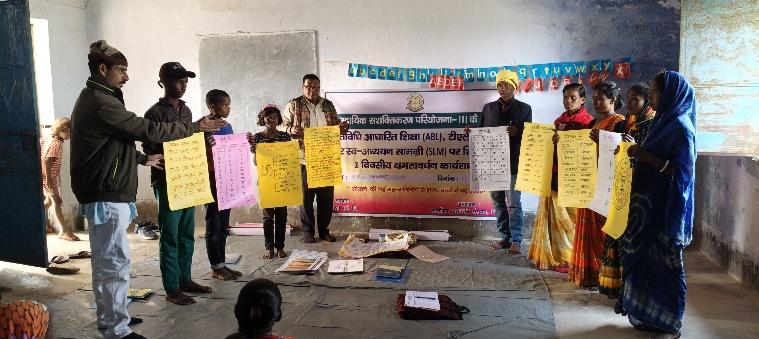
During the first project year, our teacher capacity-building activities covered seven schools. The work focused on preparing teaching-learning materials, making classroom learning enjoyable, and developing learning corners.
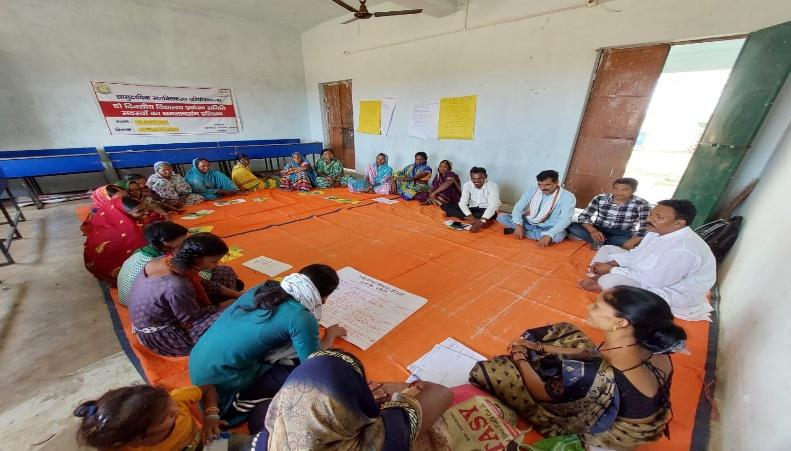
School Management Committee (SMC) training was conducted twice over two years across seven schools. Sessions addressed members' roles and responsibilities, capacity building and regular monitoring of school administration. We also support midday-meal quality checks and the preparation of school development plans.
Helping children stay connected to school
We have provided scholarship support to 16 children to help them continue their education. Of the 92 children identified as having dropped out, we have linked 41 back to school.
Reconnecting children with school is an important step. Our priorities include reaching more out-of-school children and supporting those at risk of leaving education.
Priorities for closer coordination
We have identified six priorities for closer coordination at block level:
- Connect Balwadi centres with nearby Anganwadi centres and primary schools to support smoother transitions for children.
- Link remedial support with schools' teaching plans and block-level education programmes.
- Strengthen block-level support for SMC monitoring and school development plans.
- Work through schools and panchayats to sustain community libraries and learning corners.
- Identify more out-of-school and at-risk children for scholarship support and reconnection with mainstream schooling.
- Coordinate with other departments on midday-meal quality and child-friendly facilities.
These priorities guide the collaboration we seek with schools, panchayats and government services. By connecting community-based learning with public education systems, we aim to help more children access the support they need to learn and thrive.