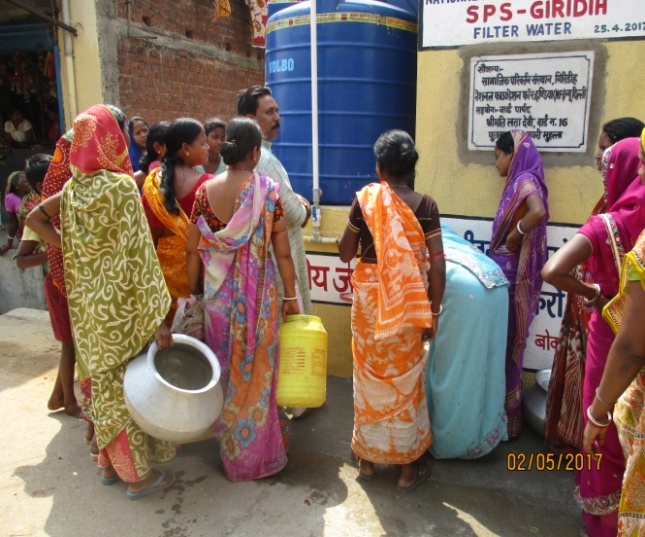
When SPS began working with Bauri Mohalla in Chas block, Bokaro, on 16 January 2016, drinking water was a pressing concern. Women were travelling long distances to collect it, and residents wanted a more dependable local supply.
Listening to residents
The neighbourhood comprised about 210 households. Organising the first meetings took time, but women showed particular interest in discussing the burden of fetching water. Repeated community meetings created space to consider drinking-water quality, sanitation, waste management and their connection with health.
SPS also engaged ward commissioner Lata Devi and municipal representative Amulya Bauri. These discussions highlighted the importance of combining public infrastructure with community participation and awareness.
A shared response
Residents recognised that their drinking-water supply needed improvement. Existing household filtering methods were not sufficient to address the concerns identified in the community. SPS introduced the possibility of a reverse-osmosis (RO) purification system, and residents agreed to support the initiative.
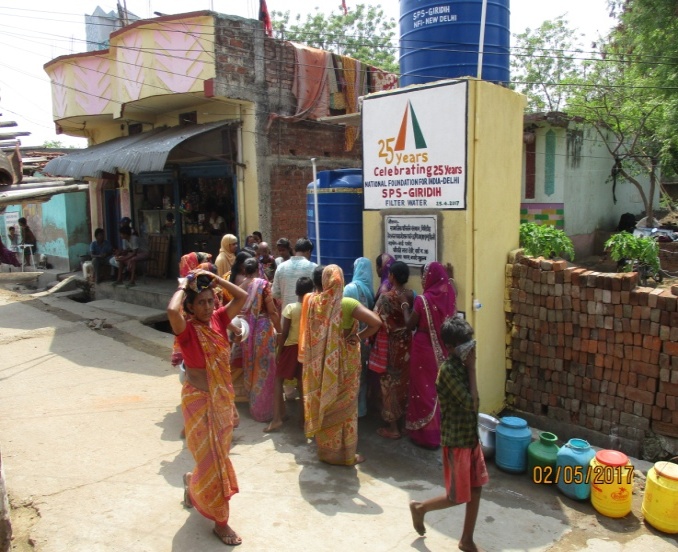
Working with the community and ward representatives, SPS helped establish the system. Water was drawn from a deep borewell, pumped into an overhead tank, passed through the RO unit, and then stored for distribution.
Access closer to home
The case study recorded access to RO-filtered water for 85 households, while the remaining population could obtain drinking water through eight standposts.
Women and girls welcomed the improved supply. SPS reported improvements in community practices and residents' wellbeing after installation. These are observations from the case study, rather than a measured assessment of disease reduction.
The story illustrates how a practical service can grow from persistent listening, local leadership and shared responsibility. Alongside infrastructure, discussions about sanitation and careful water use remained an important part of the work.